
2026 RESEARCH REPORT
Nurse-to-patient ratios in Ontario
“We Are in Survival Mode”
What happens when hospital nurses have too many patients to care for? In confidential interviews, nurses across Ontario described delayed care, exhaustion and the strain of deciding which patient to help first.
James T. Brophy, PhD, and Margaret M. Keith, PhD
What nurses told researchers
The researchers interviewed 14 hospital nurses working in urban and rural settings across Ontario. The study describes their experiences across a range of units, from emergency to palliative care.

“We are in survival mode at this point.”
There are a lot more sick calls now. There’s a lot more stress. There’s a lot more tension among us. We are in survival mode at this point. Before, there used to be a level of collegiality because you had the time to support someone else, but with the workload, it’s so hard now.
Claudette
Some care had to wait
Nurses described competing urgent needs and too little time for routine care, including changing dressings and repositioning patients.
The strain followed nurses home
Nurses described exhaustion and moral distress: the strain of knowing what care patients need and being unable to provide it.
Heavy workloads made it harder to stay
Some nurses described moving to other roles or considering leaving hospital nursing because of the demands of the job.
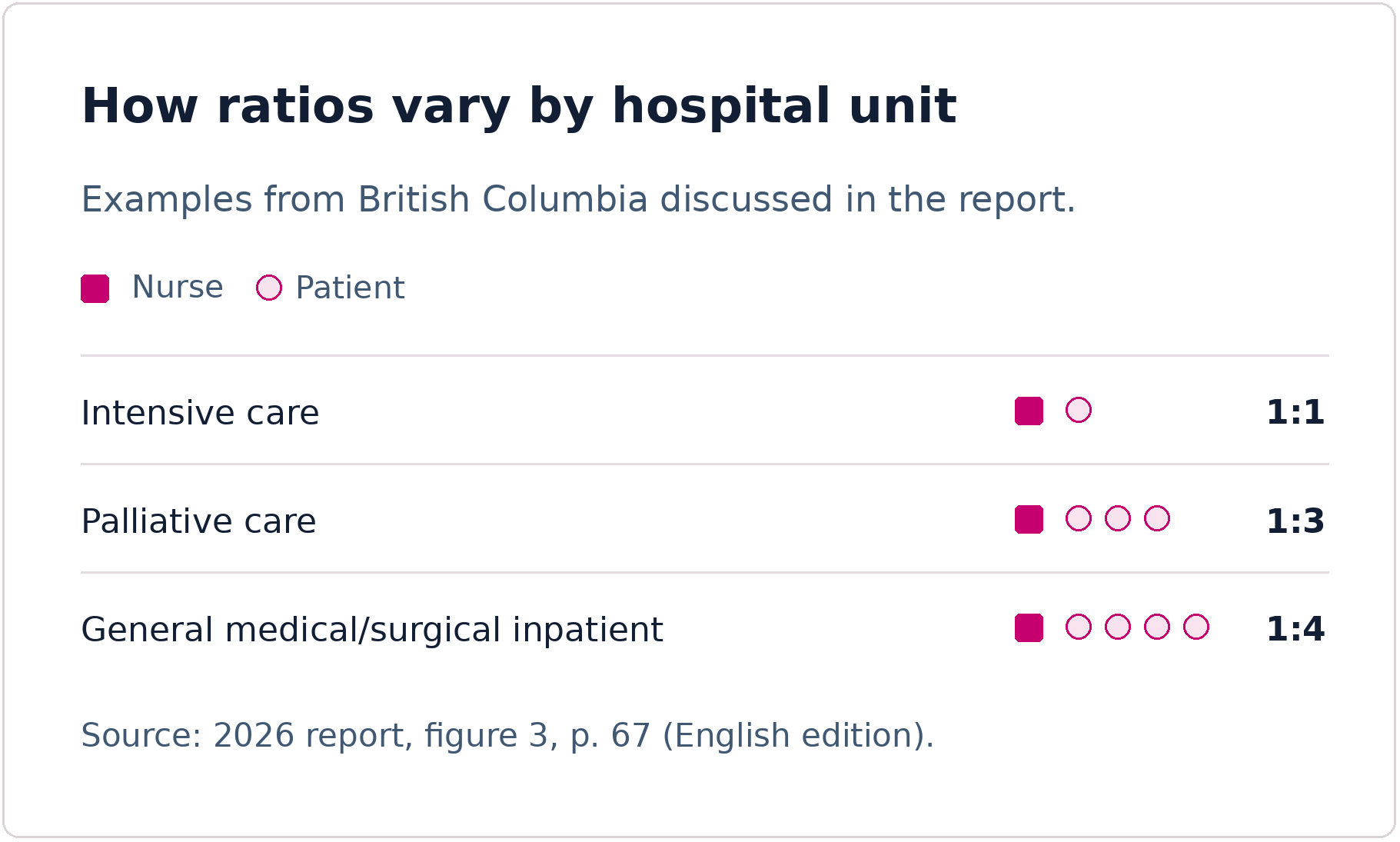
What would minimum ratios change?
Minimum nurse-to-patient ratios set a staffing floor by limiting how many patients a nurse can be assigned in a given unit. Hospitals can add staff when patients need more care.
What the authors recommend
Legislate minimum nurse-to-patient ratios across Ontario hospitals and provide the public funding needed to staff units safely.
What 551 hospital nurses told Nanos
In a separate survey commissioned by OCHU-CUPE, Nanos Research asked hospital nurses about staffing, patient care and their working conditions.
88%
reported exhaustion as a result of their job.
About 3 in 4
agreed or somewhat agreed that workload-related delays could put one of their patients at risk of harm.
49%
were considering or somewhat considering leaving their job within the next year because of working conditions.
80%
reported verbal violence or abuse at work at least once in the previous year.
Nanos Research interviewed 551 OCHU-CUPE members working as nurses in Ontario hospitals by telephone from November 4 to 15, 2026. The response rate was 6.6%. No margin of error applies.

