About Us
This Month in
Labour History
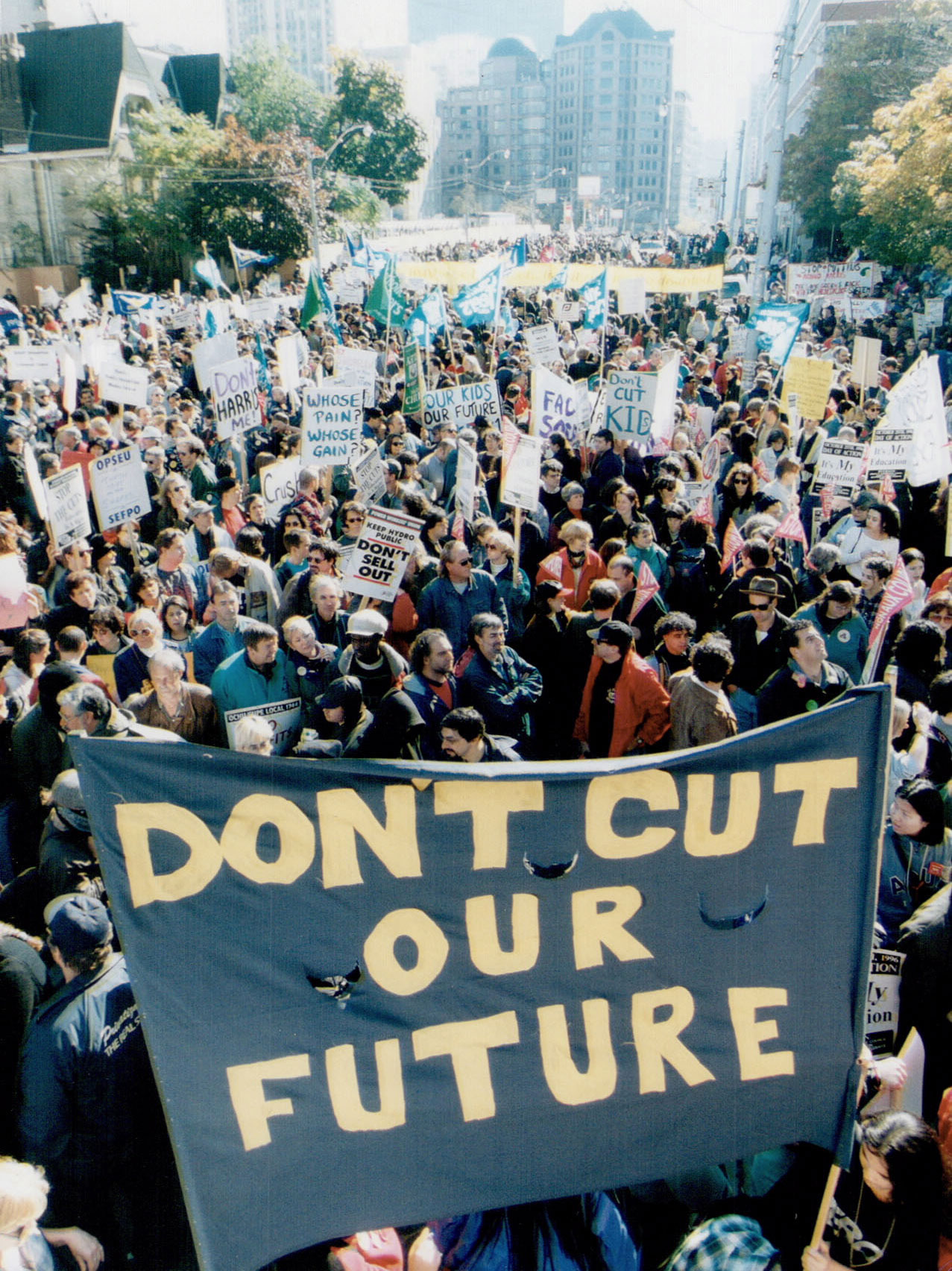
Toronto Metro Day of Action – October 25, 1996
Toronto Metro Day of Action, organized by the Ontario Federation of Labour, was the 2nd city-wide protest held by workers in reaction to the budget and spending cuts being made by the Conservative government of Premier Mike Harris. The Day of Action was a political strike by workers who were trying to demonstrate to the government it was hurting workers and needed to change its policies.
Between 1995 and 1998, Ontario unions called eleven rotating, one-day general strikes across the province involving not only unions but also many social movements and community organizations. The Day of Action were a response to a government assault on workers and the poor. The province attacked welfare recipients, encouraged work-for-welfare programs, contracted out, or downloaded services. Cuts were made to social supports and changes were made to labour laws like the anti-scab legislation, workers compensation, and labour standards.
Harris’ goal was to cut $8 billion from the provincial operating budget but, since it came with a 30-per-cent income tax cut aimed at the wealthy, others had to pay the price. In total, 10,600 civil service jobs were eliminated and healthcare was attacked. By the time the Conservatives were removed from office, they had closed 39 hospitals (six of which were psychiatric hospitals, adding to the problem of homelessness). They closed over 11,400 hospital beds and with them came staff cuts, increased contracting out, introduction of user fees, and expansion of for-profit-care.
On Friday October 25, 1996, workers from over 300 workplaces protested and marched. On that Saturday, 75,000 people listened to speeches and folksongs at a Queen’s Park rally. The mood was joyful but people were determined. Eventually hundreds of thousands of Ontario’s citizens took to the streets, shutting down businesses and public agencies. While they failed in bringing down the Conservative government, the strikes did challenge some of the anti-worker onslaught and they helped develop a new group of labor and community activists. The slogan for the Toronto Metro Day of Action was “Organize, Educate, and Resist!”. The day brought together women, LGBTQ2+, disability, poverty, housing, and healthcare rights advocates, and anti-racist groups. Together with unions, they stood strong in solidarity.
Mike Harris stepped down as Premier of Ontario in April 2002 amid declining public support and controversy over the Conservatives’ policies. Within a year, the government was defeated. But in their last years, $9 billion in additional health spending was added to the budget thanks to community actions like the one that took place on October 25, 1996.